
Rogue Transmission Fluid Guide: Type, Capacity (2008-2026)
Your Nissan Rogue doesn’t have a regular automatic transmission. It has a CVT.
And CVTs are picky about fluid. Use the wrong stuff, or skip the service, and you can end up with a very expensive repair.
I’ve seen it happen more than once. So let’s talk about what fluid your Rogue needs, how much it takes, and how often to change it.
Quick Answer
| Details | |
|---|---|
| Transmission type | CVT (continuously variable transmission) |
| Fluid (2014-2026) | Genuine Nissan CVT Fluid NS-3 (or equivalent) |
| Fluid (before 2014) | NS-2 recommended by Nissan |
| Drain and refill (no filter change) | About 3.5 to 4 quarts |
| Drain and refill (with filter change) | About 4.2 to 5 quarts (recommended) |
| Machine flush | About 8.5 to 9 quarts |
| Nissan’s replacement interval | Every 60,000 miles (96,000 km) |
| Inspection | Every 7,500 miles |
| My own interval | Fluid and filter every 25,000 to 30,000 miles |
Confirm the details in your owner’s manual. Specs can vary by model year.
What Type of Transmission Fluid Does a Nissan Rogue Use?
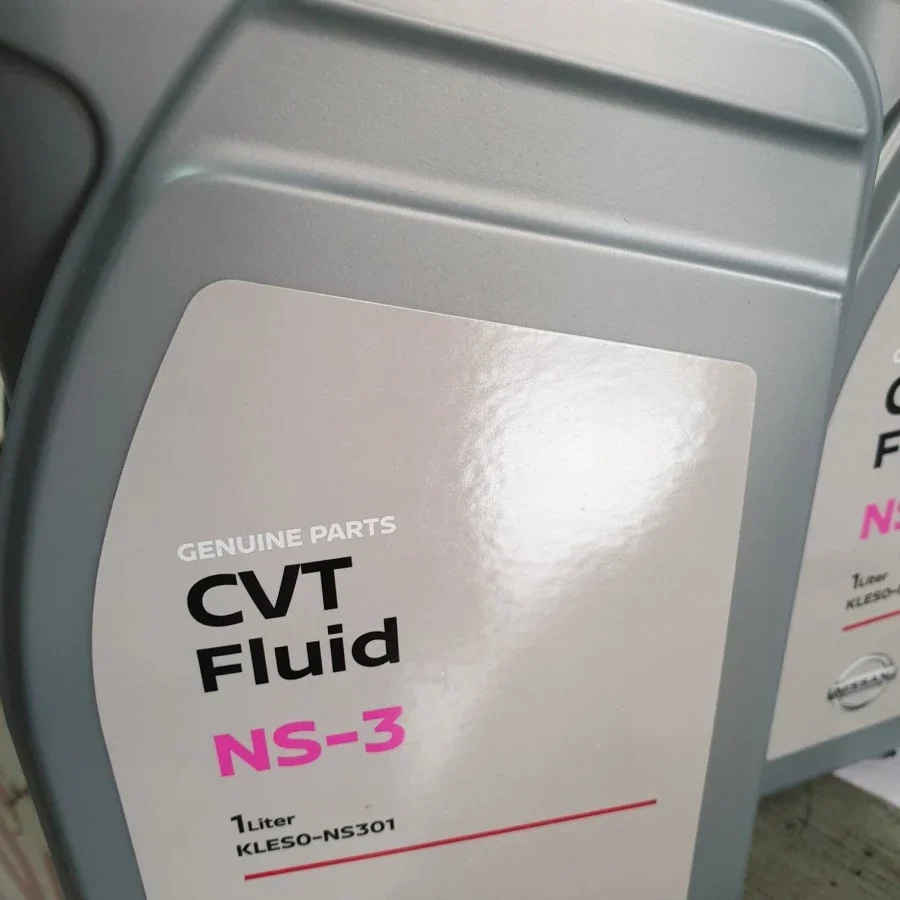
For most Rogues, the answer is Genuine Nissan CVT Fluid NS-3, or an equivalent.
Nissan is very direct about this in the owner’s manual. It says to use NS-3 (or equivalent) only in Nissan CVTs, and not to mix it with other fluids.
It also says never to put regular ATF or manual transmission fluid in a Nissan CVT. That can damage the transmission.
And here’s the part people miss. Damage caused by using a fluid other than the recommended one isn’t covered by Nissan’s new vehicle warranty. The same goes for fluids that aren’t equivalent to NS-3.
What About Older Rogues?
For model years before 2014, Nissan recommends NS-2.
That said, in my opinion NS-3 is the better choice, even on those older models. But this is one to confirm with a transmission specialist before you buy, since the two fluids are not the same product.
Nissan Rogue Transmission Fluid Capacity
Here’s something most articles won’t tell you. Nissan doesn’t list the CVT fluid capacity in the owner’s manual.
My guess? Nissan wants owners to do this service at the dealer. The procedure is a bit of a hassle, so it makes sense.
But from several sources and my own experience, these are the numbers I work with:
| Service Type | Approximate Amount |
|---|---|
| Drain and refill, no filter change | 3.5 to 4 quarts |
| Drain and refill with filter change (recommended) | 4.2 to 5 quarts |
| Machine flush | 8.5 to 9 quarts |
Why so much less for a drain and refill? Because it only removes part of the fluid. The rest stays inside the transmission.
These are approximate figures, not official Nissan specs. Your shop should use the correct procedure for your exact model year.
How Often Should You Change the CVT Fluid?
Here’s what Nissan says.
Replace the CVT fluid every 60,000 miles (96,000 km). Inspect it every 7,500 miles.
There’s one more rule that most owners don’t know about. If the transmission feels different, ask the dealer to check the fluid using a CONSULT. If the deterioration data is over 210,000, replace the fluid.
What Is CONSULT?
CONSULT is Nissan’s diagnostic tool. Think of it as a computer that plugs into your Rogue.
It can read trouble codes, show live data, and run tests on the car’s systems. It can also update software.
In the case of your transmission, it lets the dealer see how worn the fluid actually is. That’s the “deterioration data” Nissan talks about.
Nissan says these tools are only available at authorized service centers. So if your Rogue is acting strange, the dealer is the place to get this reading.
My Take: Change It Sooner
Now for my honest opinion.
I’ve seen a lot of CVT cars fail over the years. Not just Rogues. HR-Vs, CR-Vs, and other cars with CVTs too.
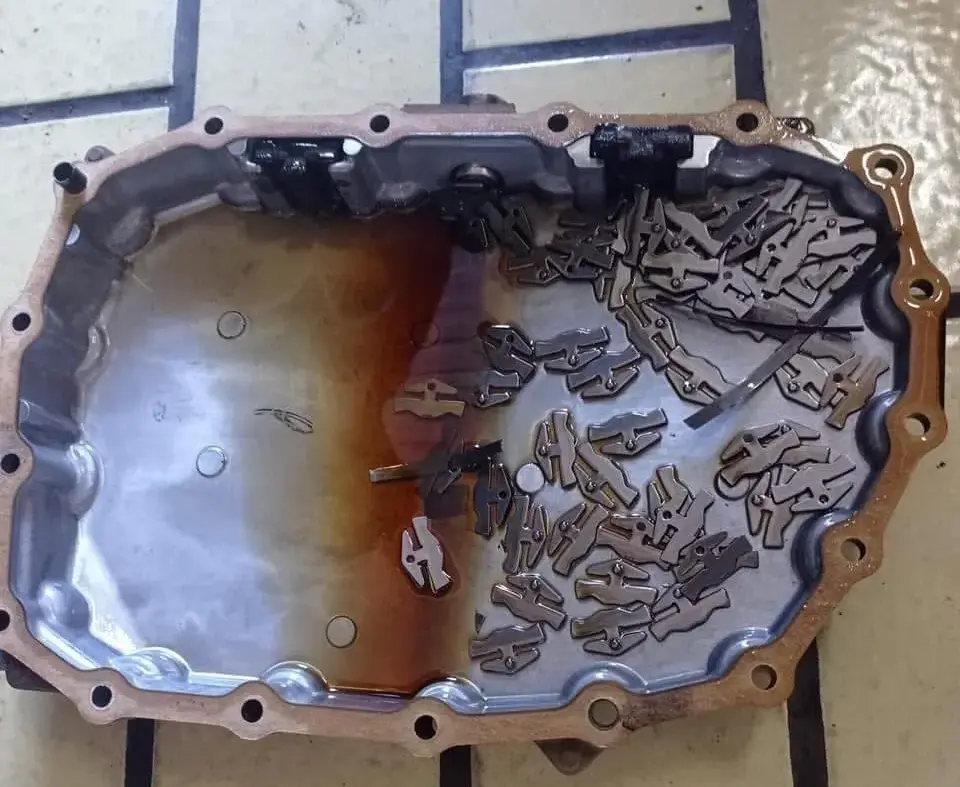
The most terrifying failure is when the steel belt snaps. There are a lot of possible causes, but the most common one I’ve seen is a skipped fluid change.
Yes, the dealer recommends 60,000 miles. But that’s for normal use.
Live in the mountains? Lots of steep climbs and long descents? Your CVT works a lot harder. In my view, that calls for a change well before 60,000 miles.
Personally, I don’t wait. Even when I’m not driving in severe conditions, I change the fluid and filter every 25,000 to 30,000 miles.
It isn’t expensive. And it’s a lot cheaper than rebuilding a transmission.
For everything else your Rogue needs and when, check our Nissan Rogue maintenance schedule.
Drain and Refill vs. Flush: My Experience
There are two ways to change CVT fluid. A drain and refill, or a machine flush.
I’ll be blunt. I don’t recommend the flush.
I once had a flush done on a CVT. Afterward, the transmission wasn’t smooth anymore. It felt jerky when shifting gears.
I asked a few transmission specialists about it. They told me the high-pressure flushing machine can damage some of the seals inside the transmission.
It may be fine on a young transmission. But on an older one, the seals and solenoids often can’t handle that pressure.
So, for me, stick with a drain and refill, and replace the filter at the same time. That’s the approach I trust to keep a CVT alive for the long haul.
Why Overfilling and the Wrong Fluid Are a Big Deal
Nissan has also published a technical bulletin on this. It says an overfilled CVT, or the wrong type of fluid, can send the transmission into fail-safe mode too early.
In plain English, the car goes into “limp mode” and drives badly.
The same bulletin lists a third cause: an incorrect coolant mix. If that’s a concern, our Nissan Rogue coolant guide covers it.
So this is one job where “close enough” isn’t good enough.
Signs Your Rogue’s CVT Fluid Needs Attention
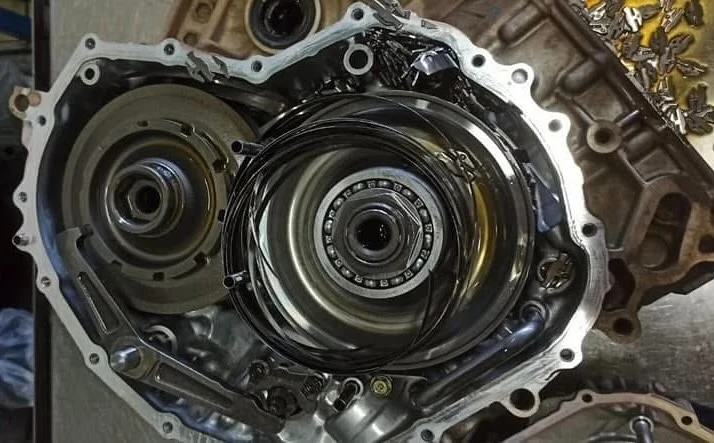
Fluid doesn’t last forever. Heat and wear break it down over time.
Watch for these warning signs:
- Shuddering or jerking when you accelerate
- A whining or humming noise
- Slipping, where the engine revs but the car doesn’t pick up speed
- A delay when you shift into drive
- The car going into limp mode
- Dark, burnt-smelling fluid
Fresh NS-type fluid is green. Nissan’s bulletin says a green or greenish-brown sample is normal, and red means the wrong fluid.
If you notice any of these, don’t wait. Get it checked soon.
Should You Do It Yourself?
Nissan recommends having a Nissan dealer handle both checking and replacing the fluid.
I’m a DIY guy myself. I change my own oil and oil filter. I swap the air filter and cabin filter. I do tires, spark plugs, and brake pads too.
But when it comes to transmission fluid, I take it to a professional. Either the dealer or a transmission specialist shop.
Why? Because CVT fluid level is sensitive, and the procedure matters. Get it wrong and you risk a very expensive repair.
Could you do a drain and refill at home? If you’re experienced and comfortable working under a car, maybe. But for me, this is one job that’s not worth the risk.
Whichever route you choose, ask which fluid they’re using. It should match what your manual calls for.
How Much Does a Nissan Rogue CVT Fluid Change Cost?
Prices vary from dealer to dealer. There’s no single number.
But in general, expect to pay somewhere between $200 and $300.
If a dealership quotes you a lot more than that, my advice is simple. Call another dealer.
Or skip the dealer altogether. A transmission specialist shop is usually cheaper.
Either way, get a quote first. And ask what’s included, like whether the filter replacement is part of the price.
Frequently Asked Questions
Recap
Your Rogue’s CVT needs the right fluid, changed on time. For most models, that’s Nissan CVT Fluid NS-3 or an equivalent.
Nissan’s official interval is 60,000 miles, with an inspection every 7,500 miles. If the transmission feels off, ask the dealer to read the fluid data with a CONSULT.
My advice is to be more proactive. Change the fluid and filter every 25,000 to 30,000 miles, and go with a drain and refill instead of a flush.

Tristan has been deep in the automotive world since 2014, long before NissanRogueInfo.com started. His interest in the Rogue actually goes back to high school when he saw a first-gen model modified for off-roading—a moment that stuck with him ever since.
With a Bachelor of Technology and over a decade of professional car journalism under his belt, Tristan doesn’t just write about specs; he’s usually the one under the hood of his own Nissan Rogue or Honda CR-V, figuring out DIY fixes and maintenance tricks. He built this site to share that hands-on experience with other SUV owners who want practical, no-nonsense advice.
One Comment