
Nissan Rogue ECO mode: When to Use It for Maximum MPG
The recent tensions in the Middle East seem to have sent gas prices skyrocketing. Well, it looks like there’s not much we can do to bring gas prices down, but as Nissan Rogue owners, we can save a little money as gas prices keep rising.
Fortunately, the Nissan Rogue is one of the most fuel-efficient SUVs in its class, achieving over 32 mpg combined, an impressive figure for a non-hybrid SUV. You can even save even more gas by activating Eco Mode.
Eco mode is one of several driving modes available on the Nissan Rogue. This mode is available on all trim levels, whether front-wheel drive or all-wheel drive.
In this article, I’ll explain how Eco mode works and when it’s best to use it, and we’ll also find out: does it actually save money, or does it just make the car slower?
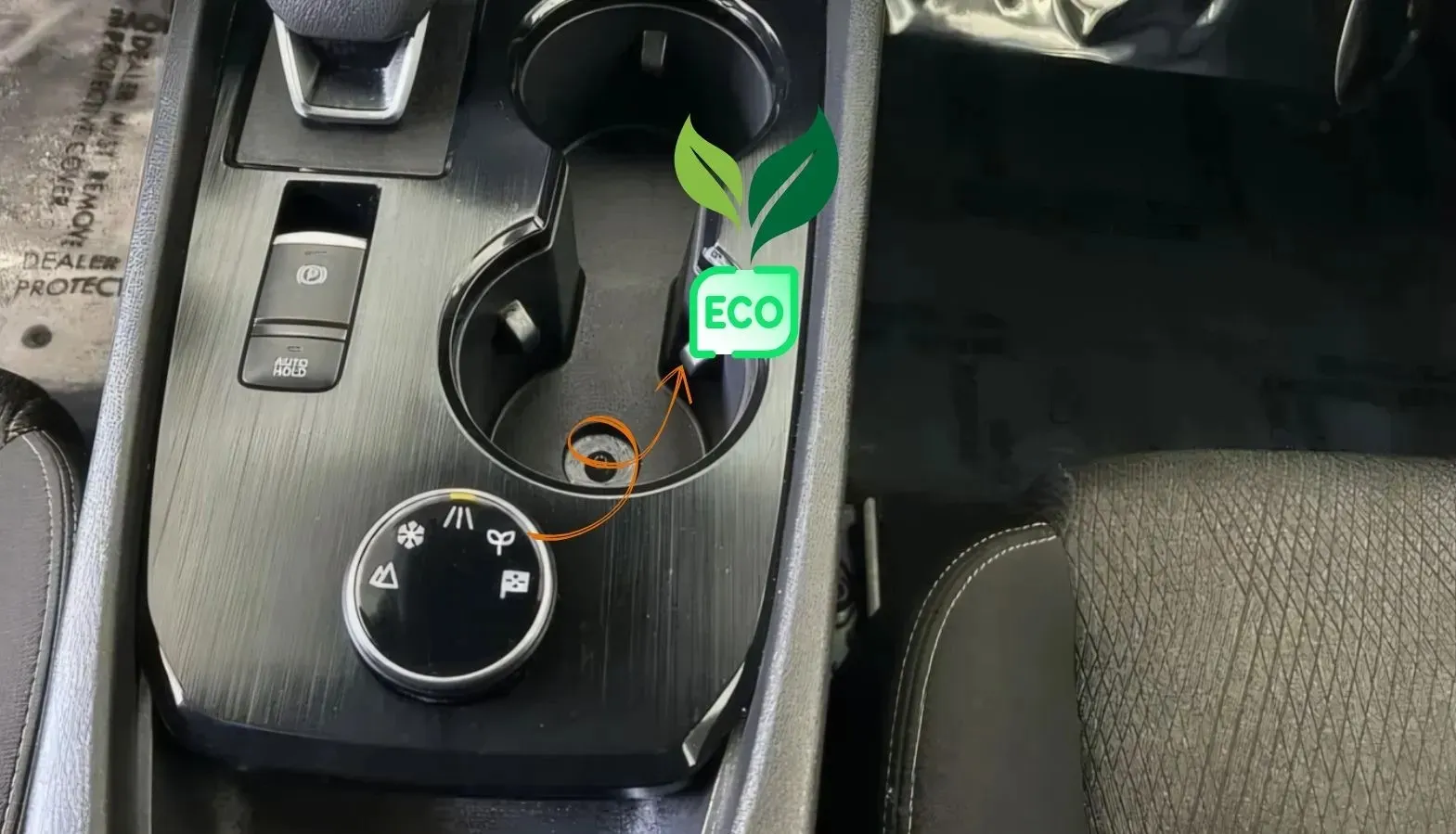
How it Works
When Eco Mode is activated, the Nissan Rogue’s computer adjusts several vehicle functions to help improve fuel efficiency. Eco Mode makes the engine run more smoothly, and the accelerator pedal feels slightly less responsive, resulting in a more gradual acceleration.
In this mode, the transmission is also adjusted to shift gears earlier, which helps keep engine RPMs low. Gear shifts also feel smoother and more relaxed.
The air conditioning and heating functions are also adjusted. The cooling system operates more gently, helping keep the engine at low RPMs to minimize fuel consumption.
The Newer Nissan Rogue is equipped with a 1.5L VC-turbo engine, making the eco mode on the Nissan Rogue more sensible, not just a marketing gimmick.
If we look at how the variable compression system works, we can see that fuel efficiency is one of its key benefits.
Nissan Rogue features a Variable Compression engine that can switch compression ratios as needed.
Under heavy load, the system instructs the engine to operate at low compression, resulting in high power output; conversely, compression can be increased up to 14:1 when the system detects that the vehicle doesn’t require much power.
Eco mode optimizes this system by prioritizing higher compression ratios ( up to 14:1) for as long as possible to maximize thermal efficiency. This is why the car feels slightly less punchy in Eco mode; the system is actively delaying the shift to low compression to keep fuel consumption at a minimum.
When to Use (and When to Avoid) ECO Mode
When Eco mode is activated, the vehicle’s main priority is to save fuel. As we discussed earlier, this efficiency is achieved by reducing engine power and some other vehicle functions.
You should use Eco mode if your driving conditions allow it. Eco Mode is best suited for:
- Highway cruising
- Flat roads,
- Stop-and-go city traffic.
However, since engine power is reduced in Eco mode, you should avoid using this mode in certain situations, including:
- Merging onto fast highways
- Towing
- Driving on steep uphill mountain passes
So, when you need all the power your SUV has to offer. For example, when overtaking another vehicle on the highway, you should turn off Eco mode. In this situation, you should use one of the other Nissan Rogue driving modes.
Real-World Expectations
So, does Eco Mode really save money? Or does it just make the car slower?
Well, Eco Mode isn’t a magic button that can boost your car’s fuel economy from 30 mpg to 50 mpg. It only makes a slight difference.
Eco Mode does actually make a difference. I’ve noticed savings of about 2 or 3 mpg when I turn on Eco Mode for long drives. The difference is small, but it’s significant.
In an article published by consumerreports.org a few months ago, Jeff S. Bartlett conducted tests to find out if Eco Mode really saves gas; they concluded that Eco Mode improves fuel economy by about 2–3 mpg compared to an erratic driving style.
To be honest, eco mode won’t give you the best results if your driving style isn’t “eco-friendly.” Drive normally, press the gas pedal gently, try not to accelerate too frequently, and maintain a constant speed; that way, I’m sure you’ll see an improvement in fuel economy.
Some people think that you can save fuel simply by adjusting your driving style, even without Eco Mode. Well, that’s not entirely wrong; in fact, Eco Mode helps make it easier to adjust your driving style.
Frequently Asked Questions
Verdict
Eco mode is a feature built into the Nissan Rogue for several years now. It gives drivers the option to save a little fuel.
Eco mode has become more efficient with the introduction of the 1.5L variable-compression turbo engine; this engine operates with variable compression, which affects fuel consumption.
Eco Mode has proven to help drivers save a little gas, but it also comes with consequences—that’s why you need to understand its characteristics. You can refer to the chart below for a clearer understanding.
| Feature | Standard Mode | ECO Mode |
| Throttle Response | Linear & Responsive | Soft & Dampened |
| Transmission (CVT) | Normal RPM Ratios | Low RPM Priority |
| VC-Turbo Ratio | Variable (8:1 – 14:1) | Focuses on 14:1 (High) |
| Climate Control | Full Output | Reduced Compressor Load |
| Best Used For | Everyday Driving | Cruising & Heavy Traffic |
If you have further questions or want to share your experiences with fuel savings, feel free to leave a comment below!

Tristan has been deep in the automotive world since 2014, long before NissanRogueInfo.com started. His interest in the Rogue actually goes back to high school when he saw a first-gen model modified for off-roading—a moment that stuck with him ever since.
With a Bachelor of Technology and over a decade of professional car journalism under his belt, Tristan doesn’t just write about specs; he’s usually the one under the hood of his own Nissan Rogue or Honda CR-V, figuring out DIY fixes and maintenance tricks. He built this site to share that hands-on experience with other SUV owners who want practical, no-nonsense advice.
3 Comments