Nissan Rogue Oil Guide: Capacity, Interval, Type (2007-2026)
We can both agree that regular engine oil changes are one of the most important parts of maintaining your Nissan Rogue. That’s why knowing the correct oil type and capacity is essential, it helps you buy the right oil and the right amount.
In this guide, I’ll break down the oil capacity and recommended oil type for each model year of the Nissan Rogue, making it easy for you to find exactly what you need.
I’ll also explain why the oil capacity matters, and share some helpful tips on how to check and change your Rogue’s engine oil.
Nissan Rogue Oil Capacity & Type By Model Year
You can find oil capacity information in your Nissan Rogue owner’s manual, but it’s not always easy to locate.
Unfortunately, Nissan doesn’t make this detail very clear, which can be a bit frustrating.
That’s why I’ve put together this guide, to give you a straightforward look at the oil capacity and recommended oil type for each model year of the Rogue.
Just scroll down, find your model year, and you’ll see the oil capacity listed right next to it.
| Model Year | Oil Type | Oil Capacity (With Filter Change) |
|---|---|---|
| 2026 | 0W-20 SP | 5.0 qt. (4.7L) |
| 2025 | 0W-20 SP | 5.0 qt. (4.7L) |
| 2024 | 0W-20 SP | 5.0 qt. (4.7L) |
| 2023 | 0W-20 SP | 5.3 qt. (5.1 L) |
| 2022 | 0W-20 SP | 5.3 qt. (5.1 L) |
| 2021 | 0W-20 SP | 5.3 qt. (5.1 L) |
| 2020 | 0W-20 SN | 4.8 qt. (4.6 L) |
| 2019 | 0W-20 SN | 4.8 qt. (4.6 L) |
| 2018 | 0W-20 SN | 4.8 qt. (4.6 L) |
| 2017 | 0W-20 SN | 4.8 qt. (4.6 L) |
| 2016 | 0W-20 SN | 4.8 qt. (4.6 L) |
| 2015 | 0W-20 SN | 4.8 qt. (4.6 L) |
| 2014 | 0W-20 SN | 4.8 qt. (4.6 L) |
| 2013 | 5W-30 SN | 4.8 qt. (4.6 L) |
| 2012 | 5W-30 SM | 4.8 qt. (4.6 L) |
| 2011 | 5W-30 SM | 4.8 qt. (4.6 L) |
| 2010 | 5W-30 SM | 4.8 qt. (4.6 L) |
| 2009 | 5W-30 SM | 4.8 qt. (4.6 L) |
| 2008 | 5W-30 SM | 4.8 qt. (4.6 L) |
| 2007 | 5W-30 SM | 4.8 qt. (4.6 L) |
The oil capacity listed in the table above applies when the oil change includes replacing the oil filter.
If the filter is not changed, the capacity is typically about 0.4 to 0.5 quarts less, since some oil remains in the old filter.
That said, I strongly recommend replacing the oil filter every time you change the oil in your Rogue. We’ll cover the reasons why in more detail later.
Owners of older Nissan Rogue models, such as the 2012 version that requires oil with an API SM rating, may have trouble finding that specific type of oil today.
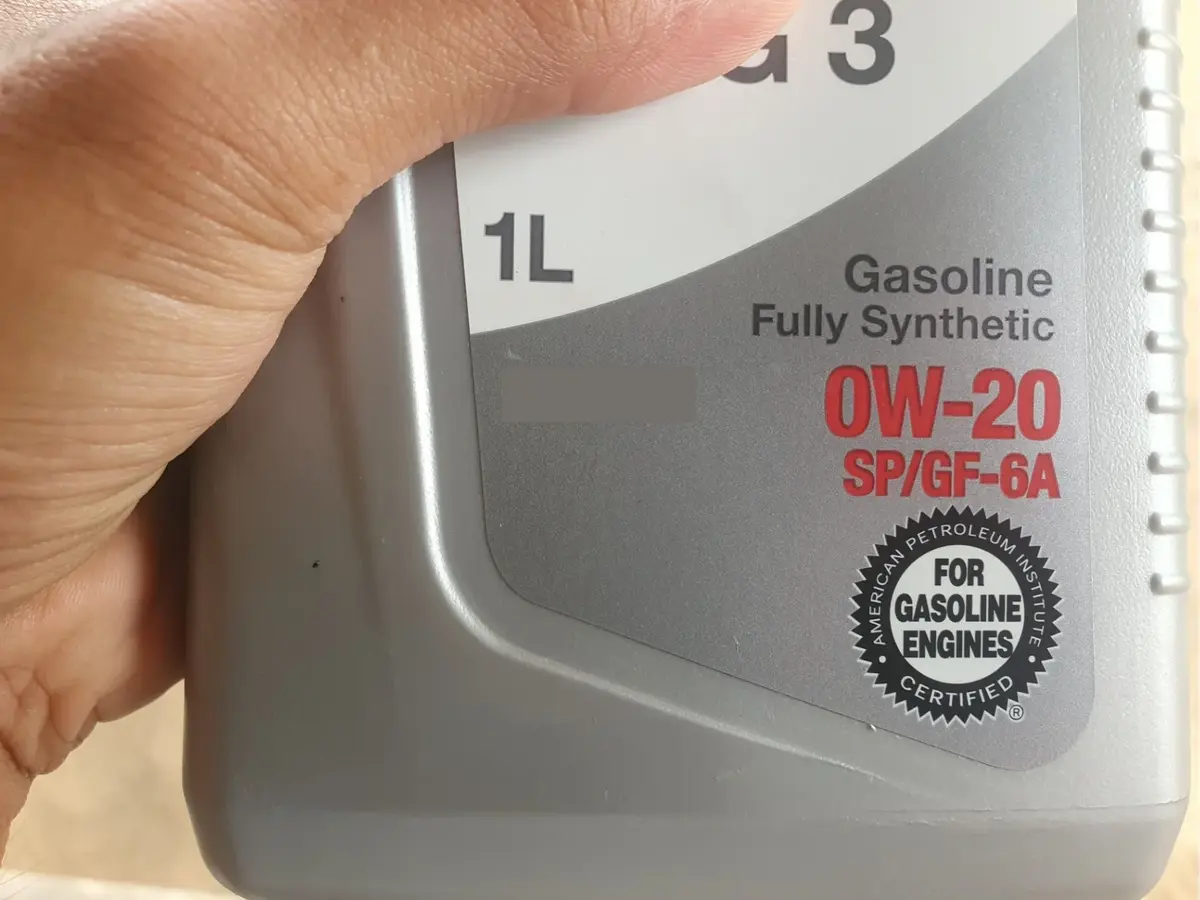
The good news is that you can safely upgrade to a newer API (American Petroleum Institute) specification. If API SM oil is hard to find, switching to API SN or SP is a suitable and more widely available alternative.
Why Using Right Type & Oil Capacity Is Important
It’s very important to use the type of oil that matches Nissan’s recommendations. Using oil with the wrong specifications can negatively impact your engine’s overall performance.
In particular, you need to pay close attention to oil viscosity, which is usually labeled with a number followed by the letter “W”—for example, 0W-20 or 5W-30.
Below are some potential problems that can occur if you use oil with a different viscosity than what the manufacturer recommends.
- Lower Fuel Efficiency: Using a higher viscosity oil than recommended can lead to reduced fuel economy. Thicker oil creates more resistance inside the engine, which makes it work harder and burn more fuel.
- Decreased Engine Performance: Because thicker oil makes the engine work harder, it can also affect overall engine performance, even if the difference isn’t immediately noticeable.
- Abnormal Engine Sounds: Using oil with lower viscosity than recommended can make the engine sound louder due to reduced cushioning between parts.
- Burning Smell And Exhaust Smoke: This is rare in modern cars, but it can happen if you use synthetic oil in an older car that typically uses mineral oil.
In addition to using the right type of oil, it’s crucial to maintain the correct oil capacity at all times. Overfilling or underfilling the engine with oil during an oil change can lead to a range of issues.
Potential problems when you overfill engine oil:
- Excess oil can come into contact with the crankshaft, causing the oil to foam (like whipped cream) and preventing proper lubrication.
- Too much oil also increases pressure within the engine, which can damage gaskets over time.
Underfilling the oil can lead to several potential problems, including:
- Overheating: A significant lack of oil increases friction between engine parts, causing the engine temperature to rise, which can lead to overheating.
- Engine Damage: Insufficient oil lubrication causes parts to wear out due to increased friction, potentially leading to serious engine damage.
- Reduced Fuel Economy: With higher engine temperatures, the engine’s power output decreases, and fuel consumption increases.
(jdpower)
Signs of Low or High Oil Level
There are a few signs that can indicate your engine has too much or too little oil. While some of these symptoms may resemble other issues, if they appear shortly after an oil change, it’s worth checking whether the oil level is correct.
Warning signs of high oil levels:
- Oil leaks
- Blue exhaust smoke
- Rough idling
- High or fluctuating oil pressure readings
- Engine stalling
- Check engine light
- Overheating
- Poor acceleration
Warning signs of low oil levels:
- Oil warning light or low oil pressure on the gauge
- Unusual engine noise
- Burning oil smell
- Overheating
- Reduced engine performance
If you notice any of these signs after changing your oil, stop your Nissan Rogue as soon as it’s safe and check the oil level right away.
(amsoil)
How to Check Your Engine Oil Level
According to Castrol.com, it’s a good idea to check your oil level regularly—about every few weeks—and before any long trips. In the past, when oil quality wasn’t as advanced as it is today, drivers were even advised to check the oil every time they refueled. Some gas stations used to include this as part of their standard service.
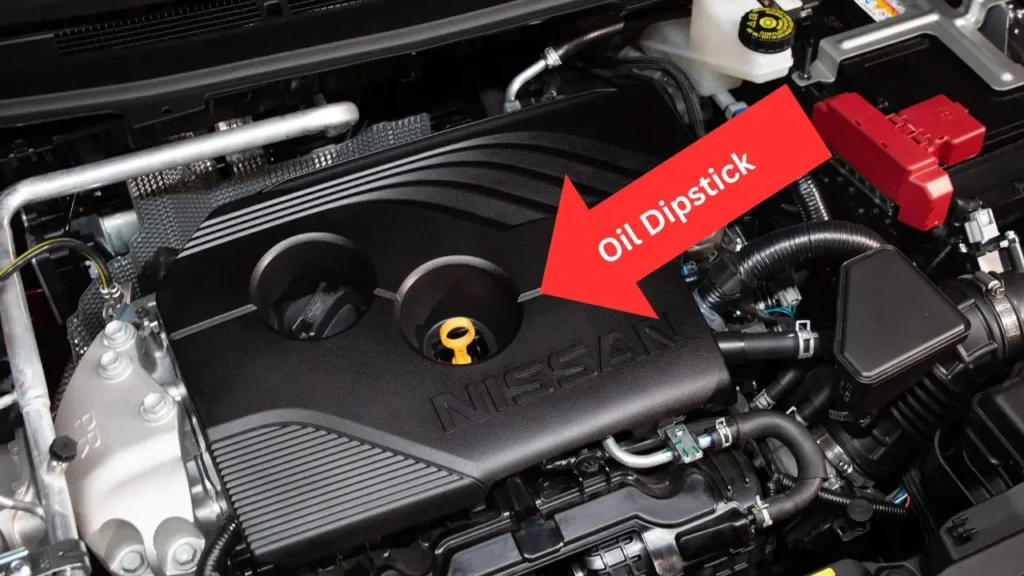
To see how much oil is in your engine, the only way is to check it manually using the dipstick. Thankfully, it’s a quick and easy task that only takes a few minutes and requires nothing more than a rag or paper towel.
Here are some basic steps to follow when checking the oil level in your Nissan Rogue:
- Park your Nissan Rogue on level ground and apply the parking brake.
- Start the engine and let it run for a couple of minutes, then turn it off. Wait at least 10 minutes to allow the oil to drain back into the oil pan.
- Open the hood and locate the dipstick.
- Pull out the dipstick and wipe it clean with a rag or paper towel. Then reinsert it fully.
- Remove the dipstick again and check the oil level.
- The oil level should fall between the dots or the “L” (Low) and “H” (High) marks on the dipstick. If it’s below the minimum mark, it means there isn’t enough oil. If it’s above the “H” mark, there’s too much oil in the engine.
- Reinsert the dipstick securely when you’re done.
If the check shows there’s not enough oil, it’s an easy fix—just add the right amount and you’re good to go.
However, if there’s too much oil in the engine, things get a bit more complicated. You’ll need a suction pump to remove the excess. If you don’t have one, you may need to drain the oil completely and start over with a fresh fill.
(2024 Nissan Rogue Owner’s Manual)
Frequently Asked Questions
Wrapping Up
Using the correct type and amount of oil, as recommended by the manufacturer, helps ensure your Nissan Rogue’s engine runs at its best. The chart above is designed to make it easier for you to find the information you need.
If you still have questions about engine oil for the Nissan Rogue, or if you’d like to share your own experience, I’d love to hear from you, feel free to drop a comment below!

Tristan has been deep in the automotive world since 2014, long before NissanRogueInfo.com started. His interest in the Rogue actually goes back to high school when he saw a first-gen model modified for off-roading—a moment that stuck with him ever since.
With a Bachelor of Technology and over a decade of professional car journalism under his belt, Tristan doesn’t just write about specs; he’s usually the one under the hood of his own Nissan Rogue or Honda CR-V, figuring out DIY fixes and maintenance tricks. He built this site to share that hands-on experience with other SUV owners who want practical, no-nonsense advice.
Use synthetics oil or regular
I always use full synthetic oil. As recommended by Nissan.