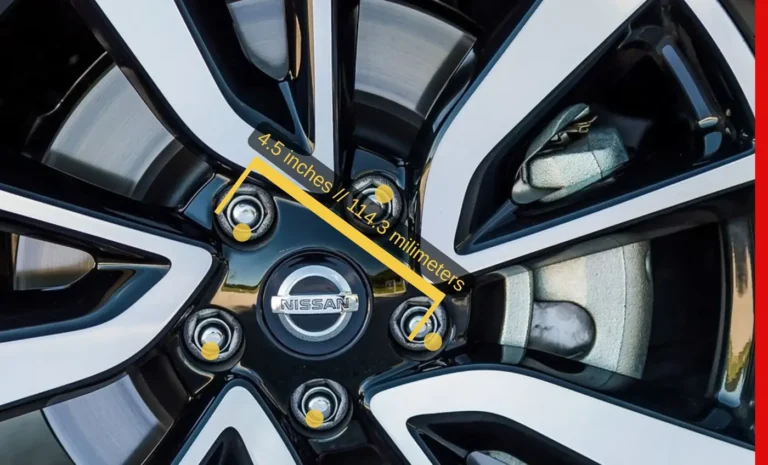
Does the Nissan Rogue Have Four Wheel-Drive (4WD)? Explained!
You’re in the market for an SUV, and the Nissan Rogue has caught your attention. Before deciding to bring one home, you want to know everything it offers.
Since one of the main reasons people buy SUVs is their ability to handle rough roads, it’s natural to wonder: Does the Nissan Rogue have 4WD?
In this article, I’ll answer your questions about four-wheel drive on the Nissan Rogue. I’ll also break down the difference between 4WD and AWD, so you know exactly what you’re getting.
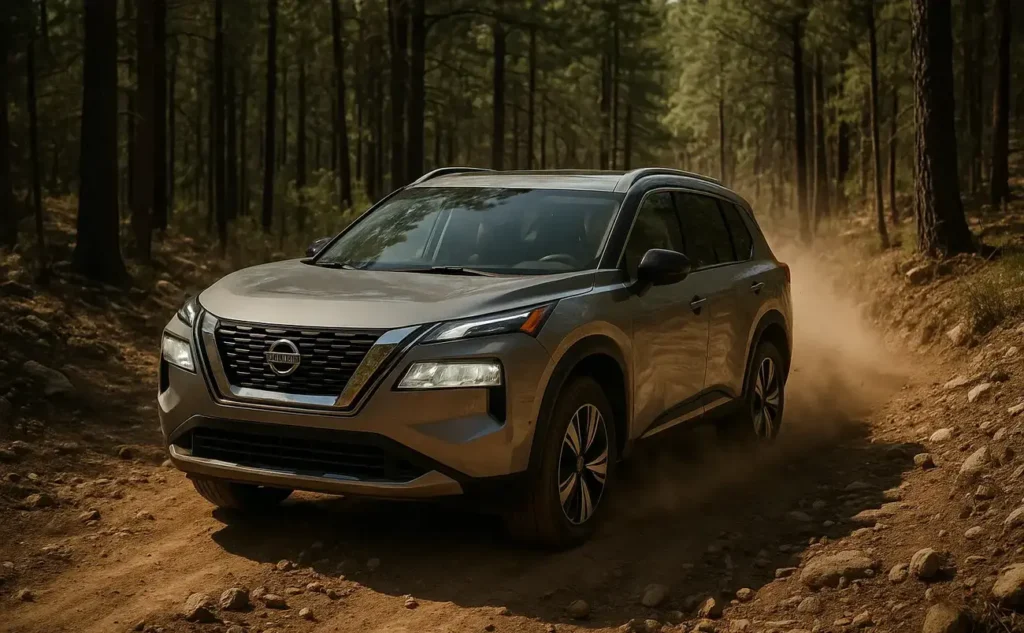
Does It Have Four-Wheel-Drive (4WD)?
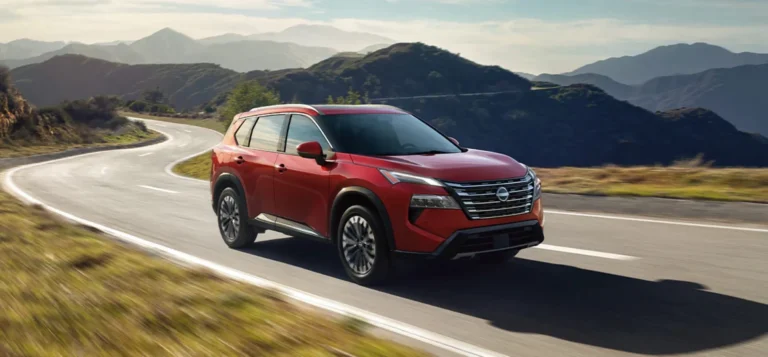
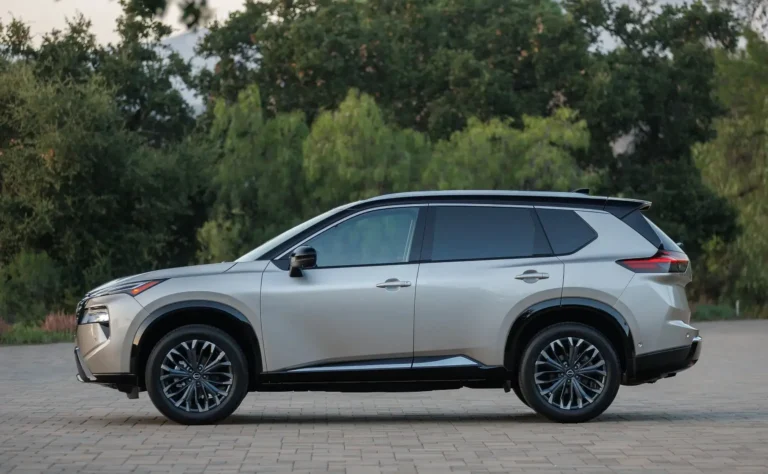
The Nissan Rogue does not come with four-wheel drive. Instead, it is available with all-wheel drive (AWD), which offers similar capabilities and, in many cases, may be even better suited for a vehicle like the Rogue. We will explore this in more detail shortly.
There is often a lot of confusion around the terms four-wheel drive (4WD) and all-wheel drive (AWD). Many people use them interchangeably, but they are actually two different systems, each with its advantages and disadvantages. I will explain both in the next section.
AWD Vs. 4WD
Both systems are designed with the same goal in mind, to power all four wheels and provide better traction, especially on challenging road conditions like slippery surfaces or steep inclines.
Although they share some similarities, there are key differences that set them apart. I’ll break down each system to help you understand how they work and which one might be better for your needs.
Four Wheel Drive (4WD)
Four-wheel drive, often referred to as 4WD or 4×4, is a system that allows the engine to deliver power to all four wheels at the same time. In a 4WD setup, each wheel receives an equal amount of power, which helps improve traction on challenging terrain.
Vehicles with 4WD typically have front and rear axles connected by a transfer case. This system gives the driver the ability to switch between two-wheel drive (2WD) and four-wheel drive (4WD) as needed.
Many 4WD systems also offer two different modes: 4H (high) and 4L (low). Each serves a specific purpose.
- 4H is best used on slippery surfaces like snow, sand, or gravel. It provides extra traction while still allowing you to maintain higher speeds.
- 4L is designed for more extreme conditions, such as steep climbs, deep mud, or rocky trails. It delivers maximum torque at lower speeds, which is ideal for tough off-road situations.
Four-wheel drive is a time-tested system and is considered the predecessor of modern all-wheel drive. It is known for its durability and strength, making it a great choice for serious off-roading, towing, and hauling heavy loads. That’s why 4WD is commonly found in large trucks and rugged SUVs.
Pros of 4WD:
- More reliable in tough conditions
- Great for heavy-duty tasks like towing, hauling, and off-roading
- Typically holds higher resale value compared to front-wheel drive or rear-wheel drive vehicles
Cons of 4WD:
- Heavier, which can impact handling and fuel efficiency
- More expensive to purchase and maintain due to their mechanical complexity
- Less fuel-efficient, even when compared to AWD systems
- Rougher on paved roads, making them less comfortable for everyday driving
All Wheel Drive (AWD)
Compared to 4WD, all-wheel drive (AWD) is a newer and more advanced technology. Like 4WD, its main goal is to maximize traction by sending power to all four wheels.
The key difference is how power is distributed. While 4WD delivers equal power to each wheel, AWD adjusts the amount of power sent to each wheel based on driving conditions. This makes it more responsive and efficient in everyday use.
In a 4WD system, the driver can manually switch between two-wheel drive and four-wheel drive. In contrast, AWD is always engage. The system automatically monitors the wheels and distributes power where it’s needed most, without any input from the driver.
Nissan refers to its version of this as Intelligent All-Wheel Drive (AWD) system, which continuously adapts to changing road conditions to improve grip and control.
Nissan’s Intelligent All-Wheel Drive (AWD) system automatically adjusts traction based on changing road conditions. It helps prevent wheel slip on slippery surfaces and distributes power smoothly to support better handling during cornering.
Pros of AWD:
- Automatically adjusts power distribution for optimal traction
- Improves cornering stability for a smoother drive
- Provides better overall ride quality, especially in changing road conditions
- Higher resale value compared to front-wheel drive or rear-wheel drive vehicles
- Lighter than 4WD
Cons of AWD:
- Lower fuel efficiency compared to two-wheel drive systems
- Generally less durable than 4WD in extreme conditions
- Not ideal for serious off-roading
As mentioned earlier, AWD may be a better fit than 4WD, especially when it comes to the Nissan Rogue.
While 4WD is known for being more robust and reliable, it’s also heavier and can negatively impact fuel economy and everyday driving comfort.
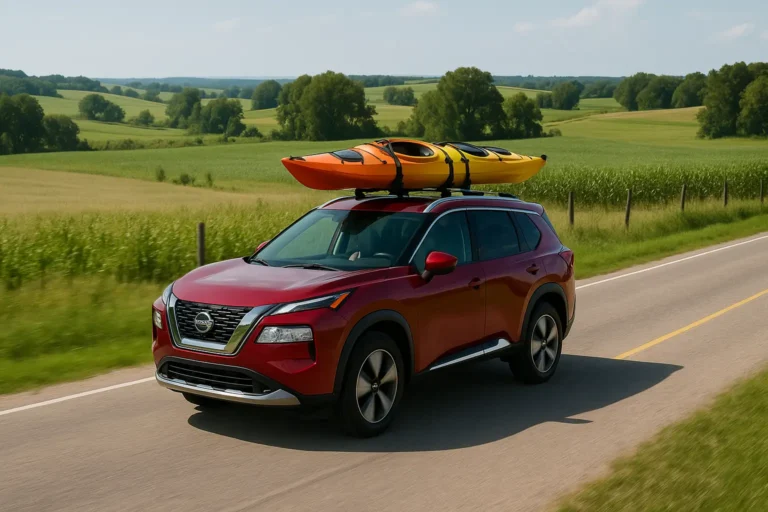
The Nissan Rogue is designed as a family-friendly SUV, not a rugged off-road vehicle. Comfort and efficiency are top priorities, though it still needs to handle light off-road conditions and winter driving.
That’s where AWD comes in. It strikes a great balance by offering improved traction and control without sacrificing ride quality or fuel efficiency.
Alternative Nissan SUV with 4WD
Now you know that the Nissan Rogue doesn’t come with traditional four-wheel drive, but instead features all-wheel drive.
If you think the AWD system on the Rogue doesn’t quite fit your needs, you might want to explore other Nissan SUVs that offer a true 4WD system as an alternative.
Nissan Pathfinder
You might want to check out the Nissan Pathfinder, a three-row SUV that comes with four-wheel drive.
The Pathfinder is a great alternative if you’re looking for something that’s still family-friendly but offers stronger off-road performance. It’s powered by a 3.5-liter V6 engine delivering 284 horsepower and is built to handle tougher tasks like towing (up to 6,000 pounds), off-roading, and hauling heavier loads.
Of course, with those added capabilities comes a trade-off. The Pathfinder is more expensive than the Rogue, and its fuel economy isn’t quite as efficient. But if power and rugged performance are what you need, it’s a solid step up.
Nissan Armada
The Nissan Armada is a full-size SUV that might be a bit of a stretch as a direct alternative to the Nissan Rogue. However, if you’re specifically looking for an SUV with true four-wheel drive, the Armada definitely stands out.
It offers impressive off-road capability, a powerful engine, a spacious interior, and a long list of standard features. Under the hood, it packs a beast—an engine that delivers up to 425 horsepower, allowing it to tow up to 8,500 pounds with ease.
That said, the Nissan Armada comes with a significantly higher price tag, costing nearly twice as much as the Rogue. But if you need maximum power and capability, it could be well worth the investment.
Frequently Asked Question
Conclusion
The Nissan Rogue is a comfortable and family-friendly SUV. While it doesn’t come with traditional 4WD, it features a more advanced and efficient all-wheel drive (AWD) system.
Even without 4WD, the Rogue handles slippery roads and light off-roading with ease. If you’re looking for a vehicle with true 4WD capability, consider alternatives like the Nissan Pathfinder or Nissan Armada.
If you have any questions, feel free to drop them in the comments section!